
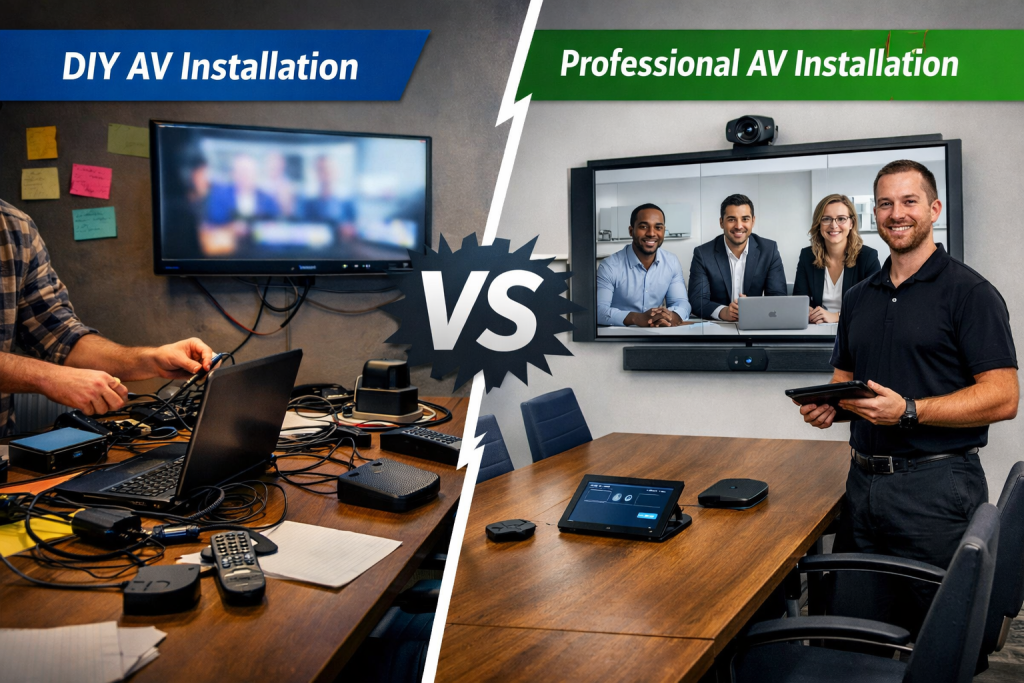
When businesses upgrade their meeting rooms or office technology, one common question comes up: should we install the AV equipment ourselves, or bring in a professional?
At first glance, DIY AV installation can seem like a cost-effective option. Screens are easy to buy online, video conferencing hardware looks plug-and-play, and many platforms promise quick setup. But in reality, the gap between DIY and professional AV installation is much bigger than most businesses expect.
Understanding that difference can save time, money, and a lot of frustration.
What DIY AV Installation Typically Looks Like
DIY AV installation usually involves purchasing off-the-shelf equipment and setting it up internally, often with help from IT staff or facilities teams.
This approach often includes:
-
Consumer-grade displays or cameras
-
Basic microphones or soundbars
-
Ad-hoc cabling and power solutions
-
Minimal consideration of room acoustics or lighting
-
Trial-and-error setup
While this might work in very small spaces, problems often appear quickly once the room is used regularly for meetings or video calls.
Common Issues with DIY AV Setups
Businesses that choose DIY AV installation often run into the same challenges.
Sound quality is a big one. Poor microphone placement, echo, and background noise can make meetings difficult, especially for remote participants. Video quality can also suffer due to glare, incorrect screen positioning, or cameras that don’t cover the whole room.
Other common issues include:
-
Cables on show or trailing across desks
-
Inconsistent performance between rooms
-
Systems that only one person knows how to use
-
Increased reliance on internal IT for troubleshooting
Over time, these problems lead to wasted meeting time and reduced confidence in the technology.
What Professional AV Installation Does Differently
Professional AV installation starts with design, not equipment. The room is assessed properly before any technology is selected.
This includes:
-
Room size and layout
-
Seating positions
-
Acoustics and background noise
-
Lighting conditions
-
Network and power requirements
From there, the AV system is designed to suit how the room is actually used, not just what hardware happens to be available.
Professional installers also use commercial-grade equipment designed for business use. This hardware is built to run all day, every day, and to integrate reliably with platforms like Microsoft Teams and Zoom.
Ease of Use Matters More Than You Think
One of the biggest differences between DIY and professional AV installation is how easy the system is to use.
DIY systems often require multiple remotes, apps, or manual steps just to start a meeting. This leads to delays, confusion, and people avoiding the room altogether.
Professional AV systems are designed around simplicity. One-touch controls, automated start-up, and consistent layouts across rooms make meetings start on time and reduce support calls.
Reliability, Support, and Long-Term Value
DIY AV setups rely heavily on internal staff for ongoing support. When something breaks, updates fail, or software changes, the burden falls back on your team.
Professional AV installation includes proper testing, documentation, and ongoing support options. If something does go wrong, there’s a clear point of contact who understands the system and can resolve issues quickly.
For London businesses that rely on meetings, presentations, and video conferencing daily, that reliability makes a real difference.
To see how this works in practice, take a look at our professional audio visual services in London, where we design, install, and support AV systems built specifically for business environments.
Which Option Is Right for Your Business?
DIY AV installation may suit very small or informal spaces with limited use. However, for boardrooms, meeting rooms, training areas, or client-facing spaces, professional AV installation delivers far better results.
It reduces downtime, improves meeting quality, and ensures the technology works consistently for everyone who uses it.
Final Thoughts
The real difference between DIY and professional AV installation isn’t just cost, it’s performance, reliability, and usability.
Professional AV installation ensures your meeting spaces support your business, rather than becoming a constant source of frustration. For organisations that value effective communication, it’s an investment that pays off long-term.
For more information, please contact Interact Technology.